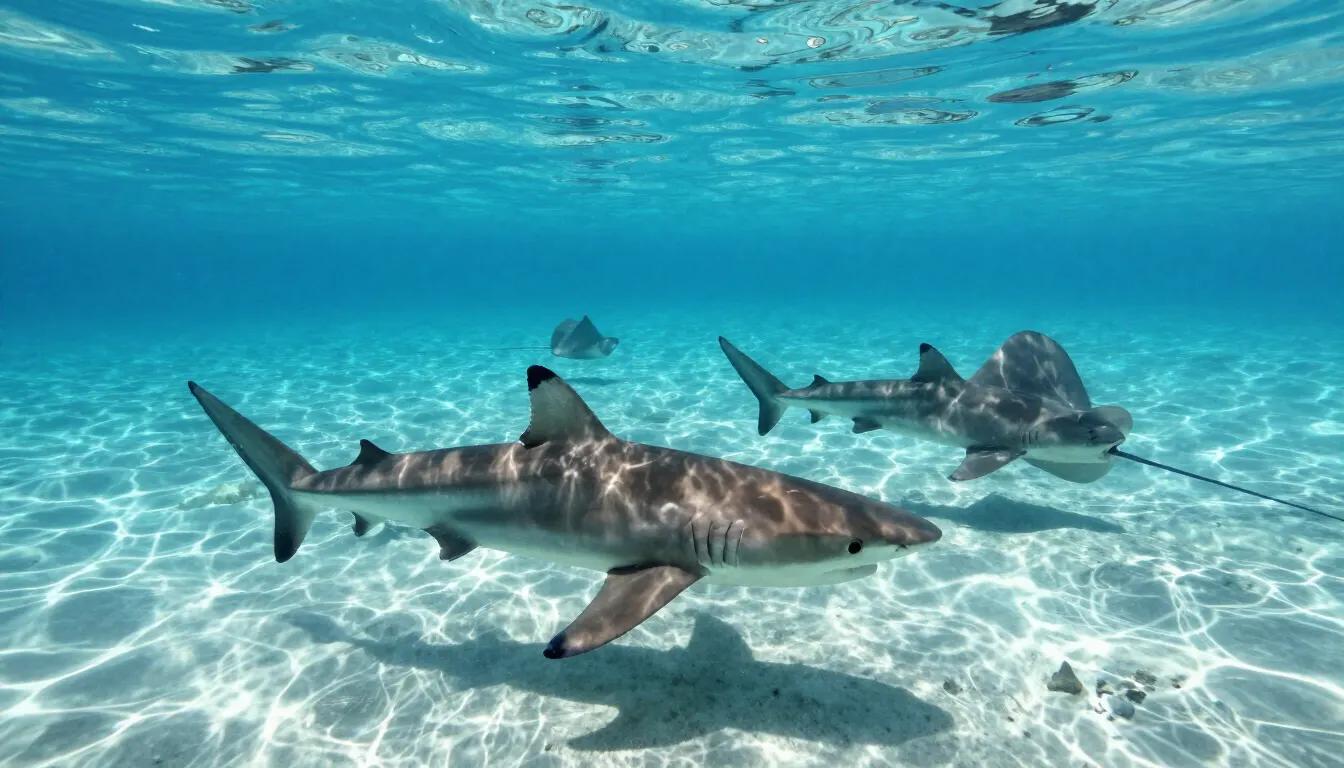
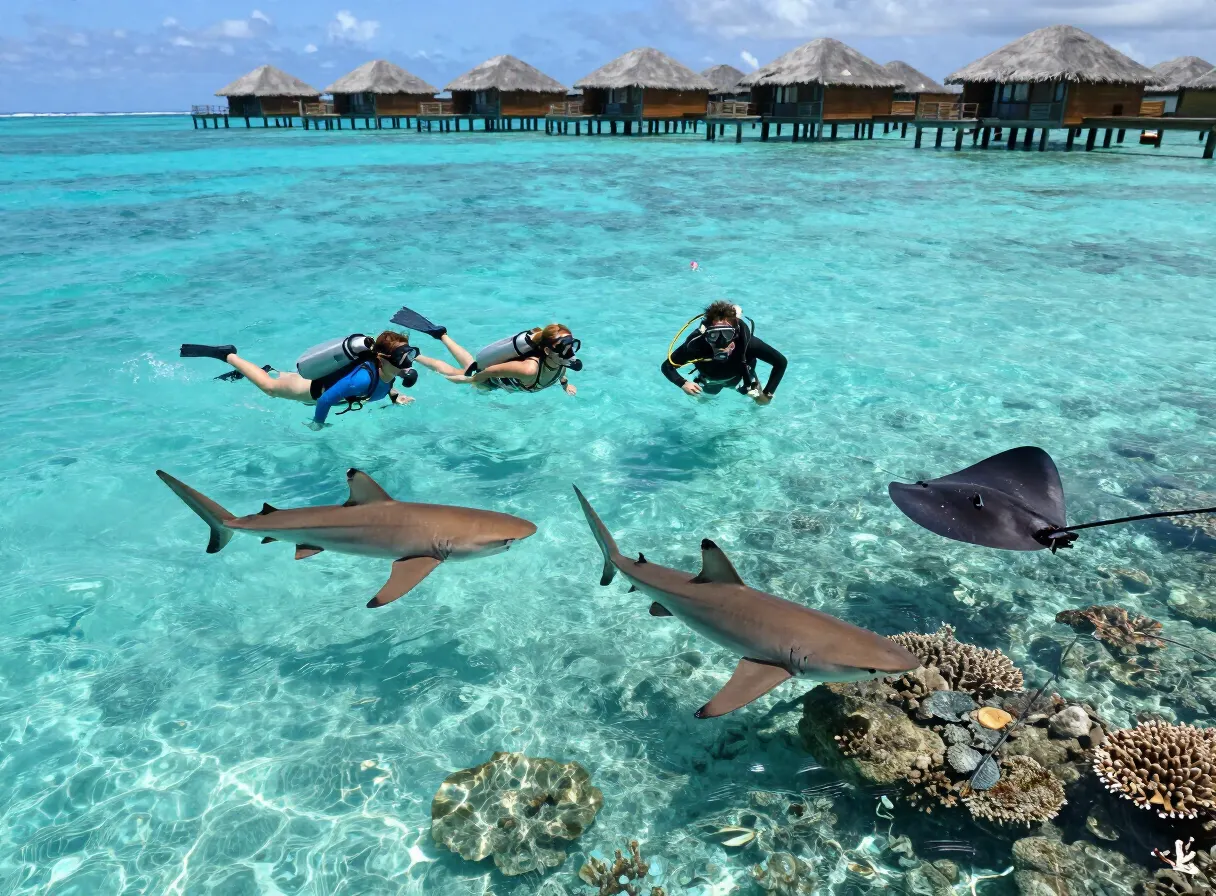
Standing in waist-deep water as pink whiprays and blacktip reef sharks glide past is a Bora Bora rite of passage — and far gentler than it sounds. Here is how to do it.
Last verified: October 2026
Is it safe?
Generally, yes. The animals are blacktip reef sharks, which are shy and rarely a threat, and pink whiprays. Guides brief you fully and stay with the group the entire time, and incidents are rare.
Feeding is illegal. In August 2025 French Polynesia's authorities warned that attracting fish, sharks or rays with food is dangerous and illegal, with heavy fines. Choose an operator that observes without feeding, and never touch the animals.
Shark & ray encounter tours
Guided snorkel encounters and lagoon tours that include a shark and ray stop.
What you'll see on a shark and ray snorkeling tour in Bora Bora
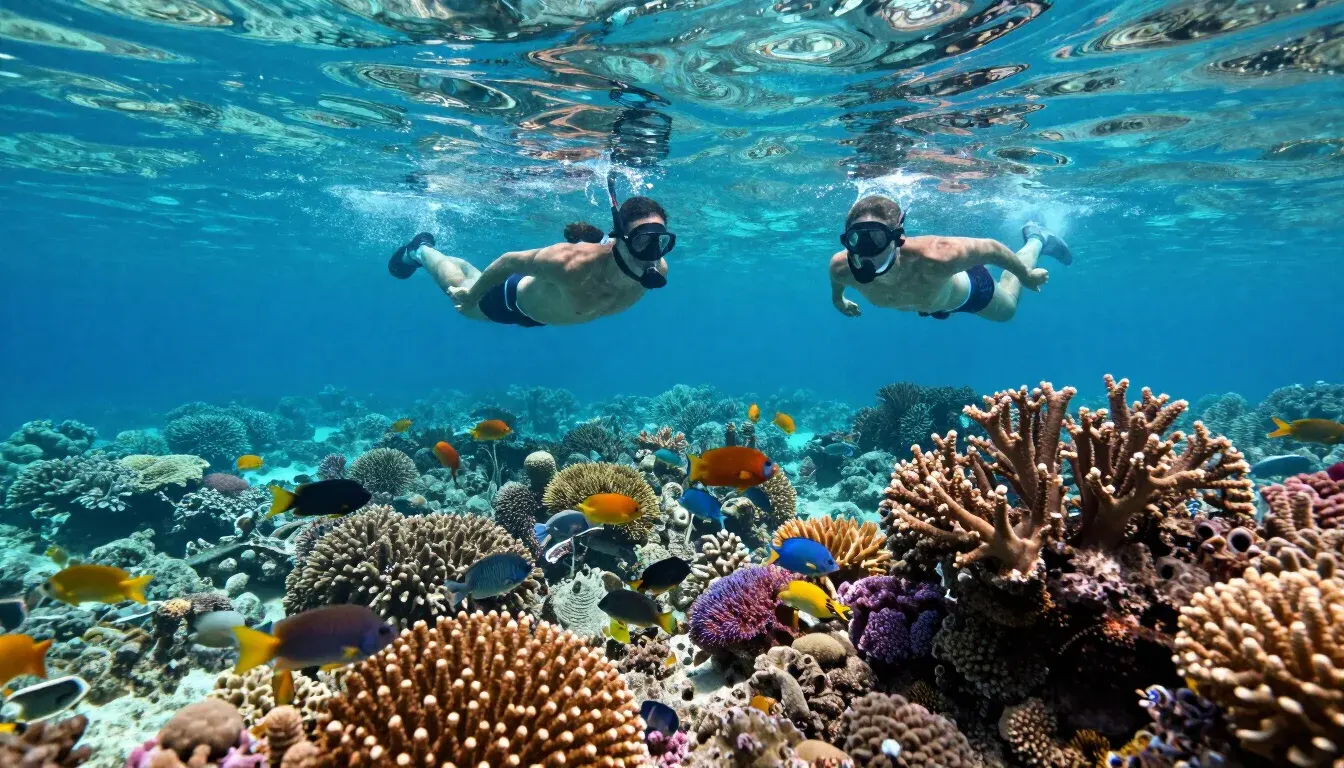
Most shark and ray snorkeling in Bora Bora happens on a half-day lagoon tour. The boat anchors over sand in clear water, often shallow enough to stand. The animals you'll meet are pink whiprays, which glide close over the sand, and blacktip reef sharks, easy to spot by the black tips on their fins. Expect reef fish too. Turtles sometimes show up on the same trip.
Larger species, like the lemon sharks seen on the Tapu dive site, live outside the barrier reef and are mostly seen by scuba divers. If you'd like to see them, read our Bora Bora scuba diving guide.
Why feeding is now off the menu
For years, some tours threw fish into the water to bring animals close. That's no longer acceptable, and it was never good for the animals.
Sharks and rays are fully protected. In 2006 French Polynesia made its entire exclusive economic zone, about 5.5 million square kilometers, a sanctuary for every shark and ray species except the shortfin mako. The mako was added in 2012.
Attracting animals is illegal. The territory's Tourism Service warned in August 2025 that attracting fish, sharks or rays with food, gestures or noise is dangerous and illegal. Where protected species are harmed, fines reach 17.8 million XPF and up to two years in prison.
Part of the lagoon is now off-limits. In late 2025 French Polynesia created the Popora Rāhui, a 574-hectare strict nature reserve on the reef south of Matira. Motorboats, fishing and water activities are banned inside it.
Without food, every encounter is a little less predictable. That's why a guide who knows the lagoon well matters more than ever.
How to choose a shark and ray operator
Ask directly whether they feed the animals, and walk away from any listing that still advertises "feeding." Older reviews may describe practices that are now illegal.
Look for a licensed, established company. Tahiti Tourisme's member listings are a good starting point, and your resort's activities desk can book them.
Check group size and boat type. Smaller boats mean less crowding in the water, and a ladder or swim platform makes getting in and out easier.
Never touch, chase or block the path of a shark or ray. Let them come and go.
Stand only on bare sand, never on coral, and look where you put your feet.
Wear a rash guard and reef-safe sunscreen, and keep jewelry to a minimum.
Stay with your guide and go back to the boat when you're asked.
Questions about the rules? Call the territory's environment agency, DIREN, at 40 47 66 66.
Frequently asked questions
Rarely. The sharks you'll meet are blacktip reef sharks, which are shy and seldom a threat, alongside pink whiprays. Follow your guide's briefing, keep your hands to yourself, and choose an operator that doesn't feed the animals, which is illegal in French Polynesia.
Absolutely. Most of the action happens in shallow, calm water where you can stand, and life vests are provided for deeper snorkel stops.
Morning tours tend to have calmer water and better visibility; the rays and sharks can be seen throughout the day at the shallow sandbars these tours visit.
Most operators welcome children who are comfortable in water, since much of the encounter happens in shallow, standing-depth areas — check the specific operator’s policy when booking.
Still planning your Bora Bora trip?
Browse the full library of resorts, activities, dining and flight guides, or estimate your costs with the trip calculator.