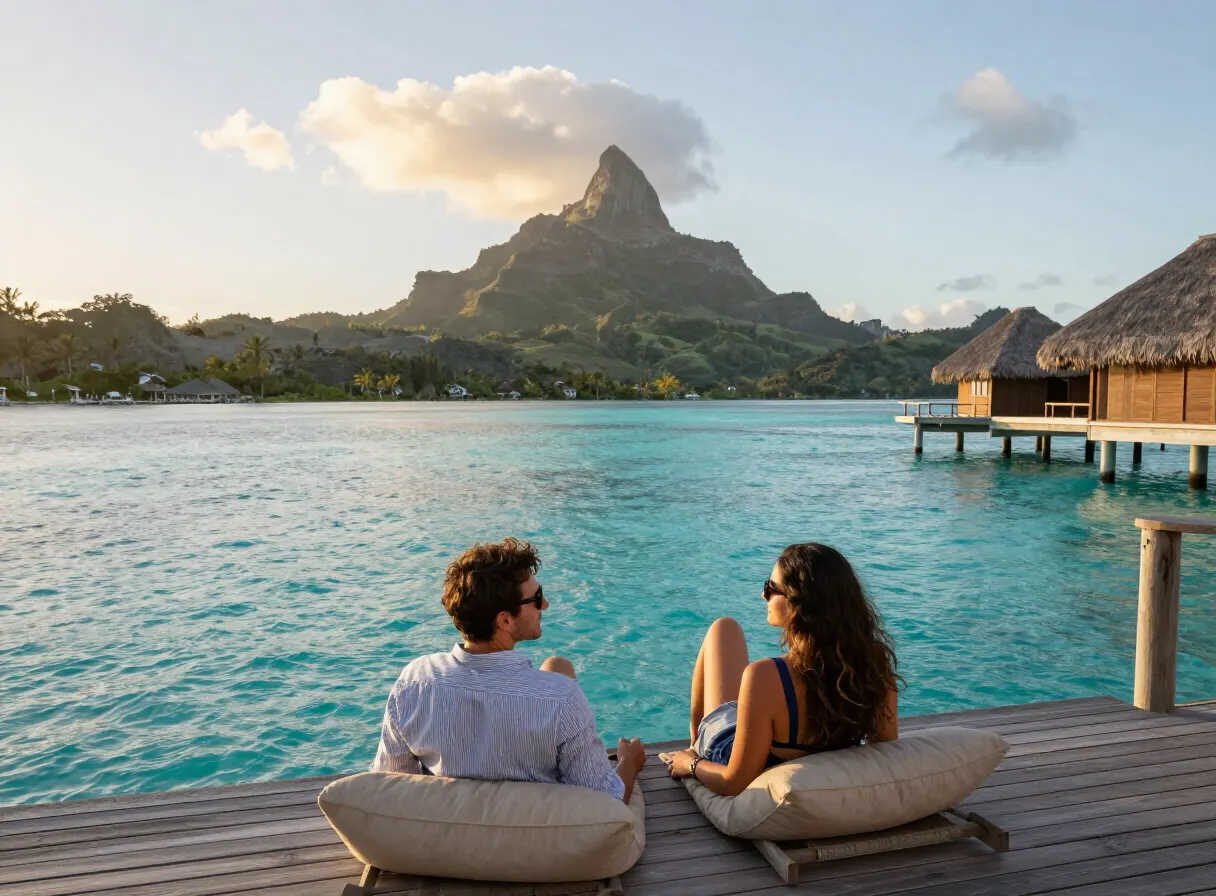
Bora Bora is more than water. Discover the island's interior, WWII history, and the most romantic sunset cruises.
The lagoon gets all the attention, but Bora Bora's lush interior and cultural sights add depth to any trip.
4x4 mountain safaris
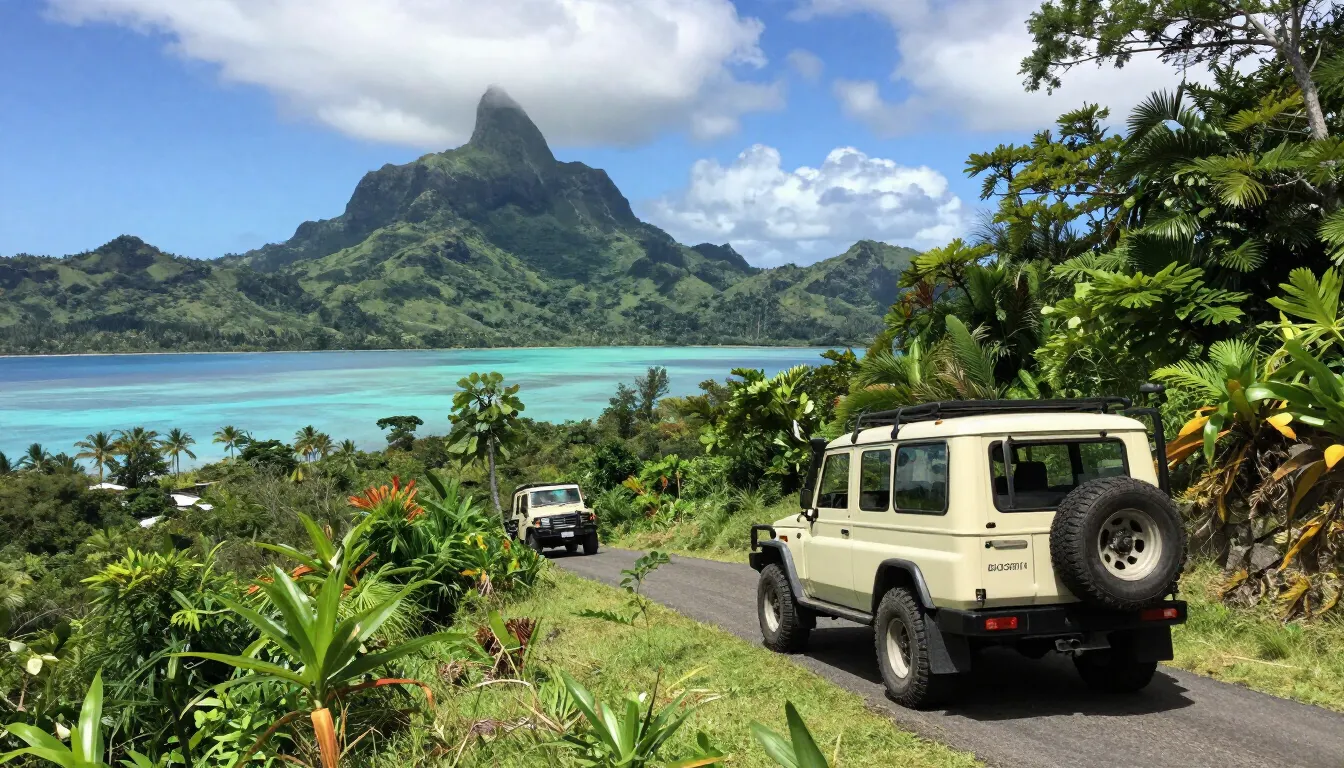
Bounce along rugged tracks to hidden viewpoints, WWII-era coastal cannons left by American forces, and panoramas of the entire lagoon. Guides share local legends and history along the way.
Hiking
Serious adventurers can hire a guide to climb Mount Pahia. It is a steep, slippery 6–8-hour round trip with rope sections, rewarded with views over the whole lagoon. Mount Otemanu's crumbling twin peaks can't be summited, so hikes stop at its shoulders.
Marae and island history
Around the island are marae, the stone platforms where ancient Polynesians held ceremonies. Many 4x4 and cultural tours stop at one; treat them as sacred sites and don't climb on the stones.
Sunset cruises
As the sun dips behind the horizon, a catamaran or traditional outrigger cruise with champagne is the quintessential romantic finale to a day in paradise.
Bora Bora 4x4 tours: what to expect
A 4x4 safari is the easiest way to reach the island's hill roads and lookouts. Shared tours start from about $90 per person (one booking platform lists €88 in October 2026) and last around three and a half hours; private vehicles for a group start from roughly €630. Typical stops include viewpoints over the lagoon and Mount Otemanu, with neighboring Raiatea, Taha'a and Tupai on the horizon, WWII remains and a fruit-tasting break.
Pickup is from hotels on the main island. If you're staying on a motu, you first take your resort's boat to the main island; one operator puts that at 2,200–3,390 XPF per person round trip, depending on the resort. The ride is bumpy, so these tours aren't recommended during pregnancy or for people with back problems. Bring sunscreen, a hat and water.
Bora Bora's WWII cannons
In 1942 the United States turned Bora Bora into a South Pacific supply base, code-named Operation Bobcat, building a fuel depot, a seaplane base and the airstrip on Motu Mute that is now the island's airport. The base never saw combat and closed on 2 June 1946. Eight 7-inch naval guns installed to guard the island are still in place on hilltops around the coast, including above Faanui Bay and at Fitiiu Point on the east side. Most sit on private land and the tracks are hard to find, which is why a guided 4x4 tour is the practical way to see them.
Marae to look for
- Marotetini: A restored marae near Farepiti wharf at Faanui Bay, about 50 m long and associated with navigators.
- Fare Opu: Just north of Faanui, partly under the coast road. Some Bora Bora marae carry turtle petroglyphs; turtles were a sacred food.
- Aehautai and Taharuu: On the east side near Point Haamaire, with views of Mount Otemanu and the lagoon.
A guided island culture and marae tour adds the stories behind the stones. For more on Polynesian traditions, see our cultural experiences guide.
Vaitape and cycling the 32 km coast road
Vaitape, on the west coast facing the lagoon pass, is the main village: the dock where airport shuttles and resort boats arrive, plus a visitor information center, a handicrafts center, banks, a post office, a pharmacy and small shops. Look for the monument to Alain Gerbault, the French sailor who circled the globe alone in the 1920s and was buried on Bora Bora in 1947.
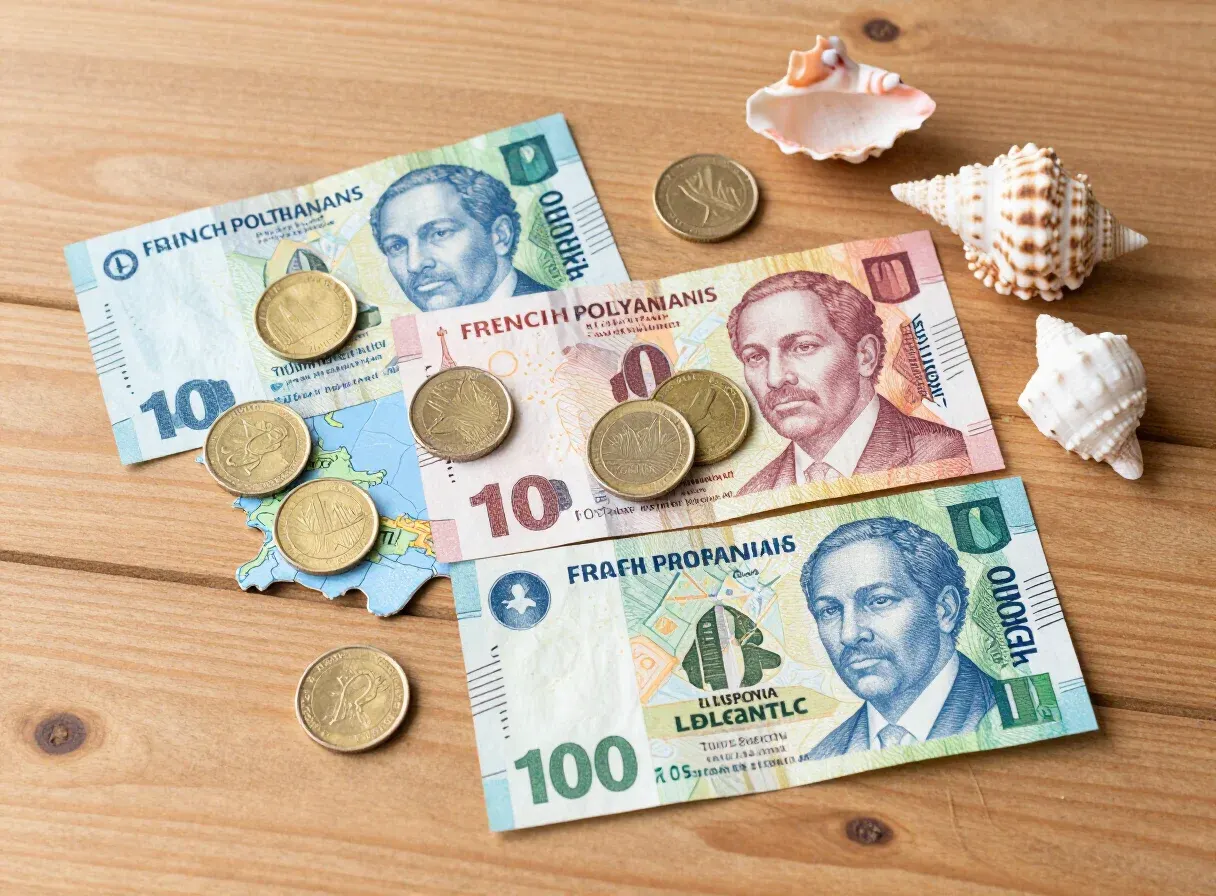
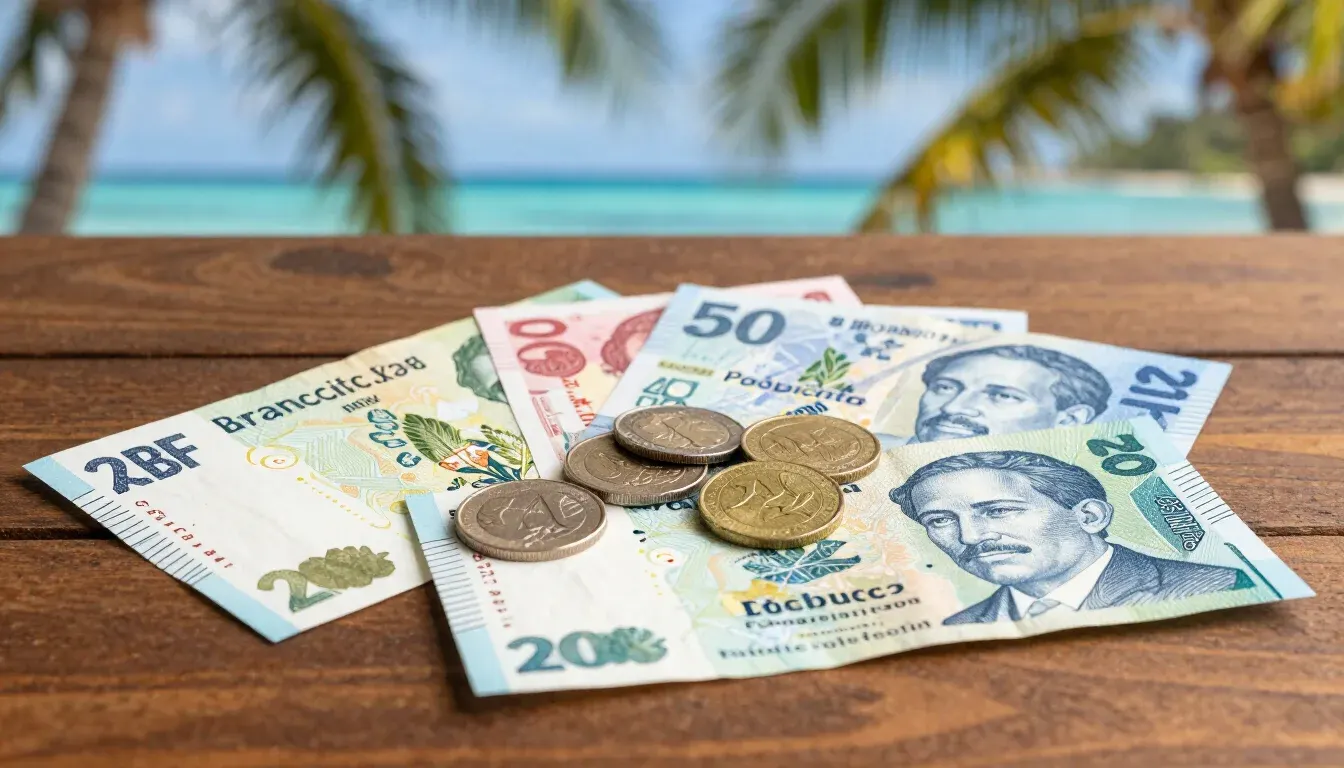
The paved road around the main island is about 32 km (20 miles) with light, slow traffic and no bike lanes, so wear a helmet. Guidebooks suggest around four hours of riding, and a full day if you stop for swims and lunch. Going counterclockwise from Vaitape takes you to Matira Beach first, then up the east side through the village of Anau, with views of Otemanu. Carry water and some cash in Pacific francs for roadside snacks. Our Bora Bora map shows the route.
More questions
How do you get around the main island without a tour?
Scooters can be rented in Vaitape, rental cars are available, and taxis wait at the Vaitape dock; agree on the fare first and expect to pay in cash. Le Truck, the open-sided local bus, stops anywhere along the coast road for a few hundred francs, but it runs irregularly and stops early in the evening.