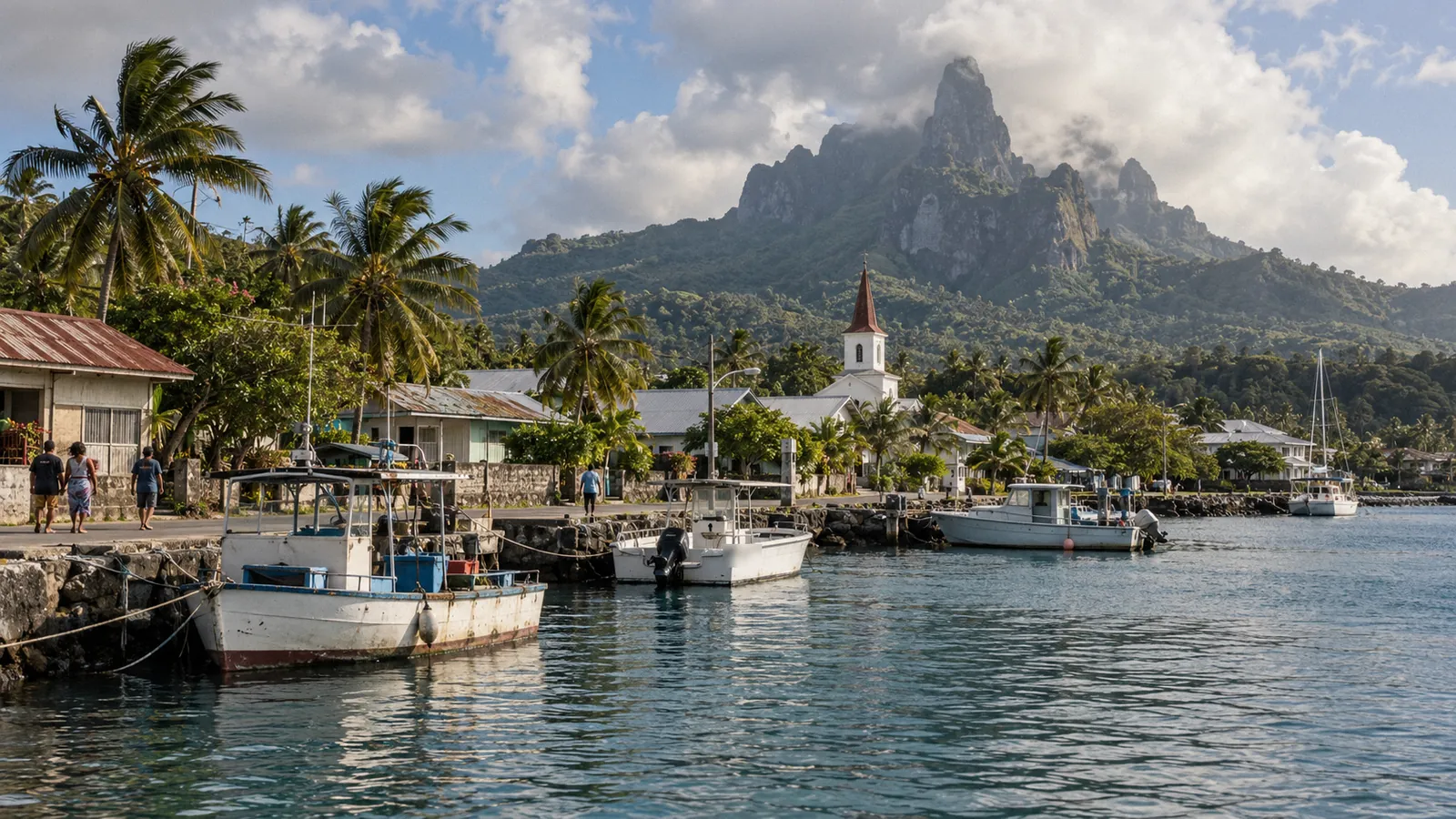
The short answer: Bora Bora had 10,758 residents at the last census, taken in August 2022 by French Polynesia's statistics institute (ISPF). That is small, but not because nobody wants to live there. The island has only about 30 km² of land, much of it steep mountain, and an economy built almost entirely on tourism.
- Where people live: three districts on the main island: Nunue (with Vaitape, the main village), Faanui and Anau.
- Trend: up 2.0% since 2017, twice the growth rate of French Polynesia as a whole.
- Density: about 350 people per km² of land, more crowded than it looks from a resort deck.
Bora Bora population: what the 2022 census says
The official count is the "population municipale," the people whose usual home is in the commune. For Bora Bora that was 10,758 in 2022. Add 98 people "counted separately" (for example, students who live elsewhere during the school year but keep a family home on the island) and the legal total is 10,856. The figures were published in ISPF's 2022 population tables by district and authenticated by a French decree in December 2022.
For context, French Polynesia as a whole had 278,786 residents, and about three in four of them live on Tahiti and Moorea. Bora Bora holds roughly 30% of the Leeward Islands' 36,000 people, second only to Raiatea, which has about 12,400.
| District | 2017 | 2022 | Change |
|---|---|---|---|
| Nunue (includes Vaitape) | 5,614 | 5,541 | Down 73 |
| Faanui (north and northwest) | 2,962 | 3,312 | Up 350 |
| Anau (east coast) | 1,973 | 1,905 | Down 68 |
| Bora Bora total | 10,549 | 10,758 | Up 209 |
Figures are municipal population from the 2017 census (INSEE) and the 2022 census (ISPF). All the growth in the last five-year period happened in Faanui, on the north and northwest coast.
How the population of Bora Bora has changed
Bora Bora has grown steadily, if slowly. The 2007 census counted 8,927 residents. By 2017 that had reached 10,549, and in 2022 it was 10,758. That is roughly 1,800 more people in 15 years, about 120 a year.
The recent pace stands out against the territory. ISPF's full 2022 census report says French Polynesia grew just 1.0% between 2017 and 2022, while Bora Bora grew 2.0%, faster than Raiatea (+1.1%). Across French Polynesia, births outnumbered deaths by about 9,350 over those five years, but about 6,500 more people left than arrived.
The same report flags a quieter change. The number of second homes on Bora Bora jumped from 270 in 2017 to 680 in 2022, about 2.5 times as many. ISPF counts furnished holiday rentals let by private owners in that category, so some of the new housing on the island is aimed at visitors, not residents.
How big is Bora Bora?
Bora Bora is tiny. The main island and its motu (reef islets) cover about 30.5 km² (under 12 square miles). The lagoon around them is about 78 km², more than twice the land. The commune is technically larger, 41.5 km², because it also includes Tupai, an atoll about 20 km to the north with no permanent residents beyond a few plantation workers.
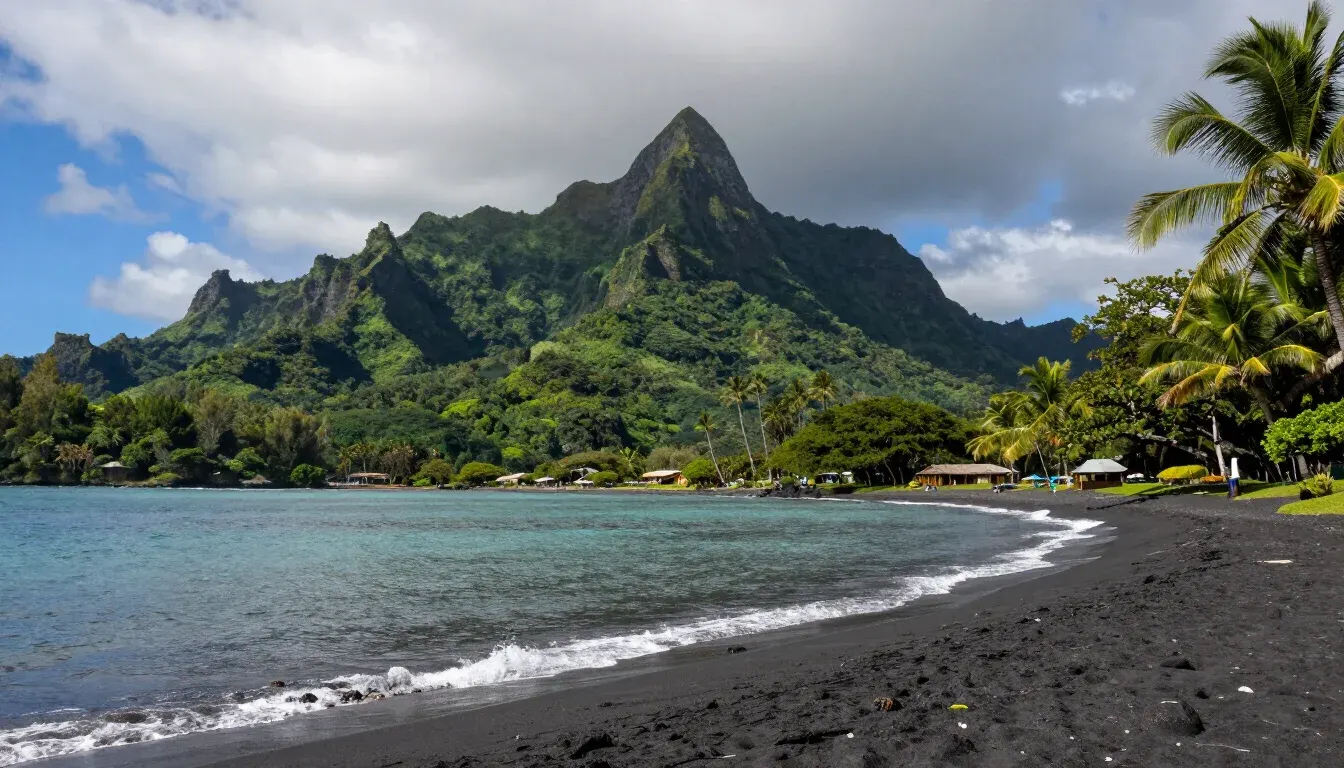
Most of that land is not buildable. Mount Otemanu (727 m) and Mount Pahia (661 m) fill the middle of the island with steep, forested slopes, so homes, shops and schools cluster along the narrow coastal strip served by the single 32 km road. Many motu are taken by resorts or the airport. Our Bora Bora map shows where everything sits.
Divide 10,758 people by roughly 30.5 km² of inhabited land and you get about 350 people per km². That is denser than most of rural America by a wide margin. Bora Bora feels quiet because the people are concentrated along one road, not because the island is empty.
Why is the population of Bora Bora so small?
Short version: little land, one industry, and a long way from everything. In more detail:
- Space. With the mountains and resort motu taken out, the usable coastal strip is often narrow. There is simply not room for a town of 50,000.
- Jobs. According to the 2022 census report, half of all jobs on Bora Bora are in hotels and restaurants. When tourism dips, people leave. Between 2008 and 2010 three hotel closures (Hotel Bora Bora, Club Med and the Bora Bora Lagoon Resort) cost roughly 400 jobs, and several resorts are closed again in 2026 (see our resort status page).
- Study and careers elsewhere. The island has a public high school, the Lycée polyvalent de Bora Bora, but the University of French Polynesia is on Tahiti, and some young people go on to mainland France. Territory-wide, more people leave than arrive.
- Land tied up in families. Much land in French Polynesia is held jointly by many heirs ("indivision"), which can make it slow to sell or build on.
- Cost of living. ISPF found prices across French Polynesia were 31% higher than in mainland France in 2022, and food 45% higher. Most goods reach Bora Bora by ship or plane from Tahiti, which adds cost.
History plays a part too. During World War II more than 5,000 American servicemen were stationed on Bora Bora, according to Tahiti Tourisme, and the base left behind the airstrip and roads still used today. The island's own population has climbed since, but its size has always kept it a small place.
Do people live in Bora Bora? Daily life for locals
Yes, and most of them have nothing to do with overwater bungalows. A typical Bora Bora resident lives on the main island, works in a hotel, on a boat, in a shop or for the commune, and gets around by car or scooter on the coast road.
- Vaitape is the hub: the town hall, the main dock, banks and most of the shops. In the evening, food trucks (roulottes) near the dock serve poisson cru and steak frites to locals and visitors alike.
- Health care is basic: there is a public dispensary but no hospital, so serious cases go to Raiatea or Tahiti (our Bora Bora safety guide has the details).
- The lagoon is the backyard. Fishing, outrigger canoe (va'a) training and weekend picnics on public beaches like Matira are part of normal life. Matira Beach is also the finish line of the Hawaiki Nui Va'a, French Polynesia's big inter-island canoe race, held on 28 to 30 October in 2026.
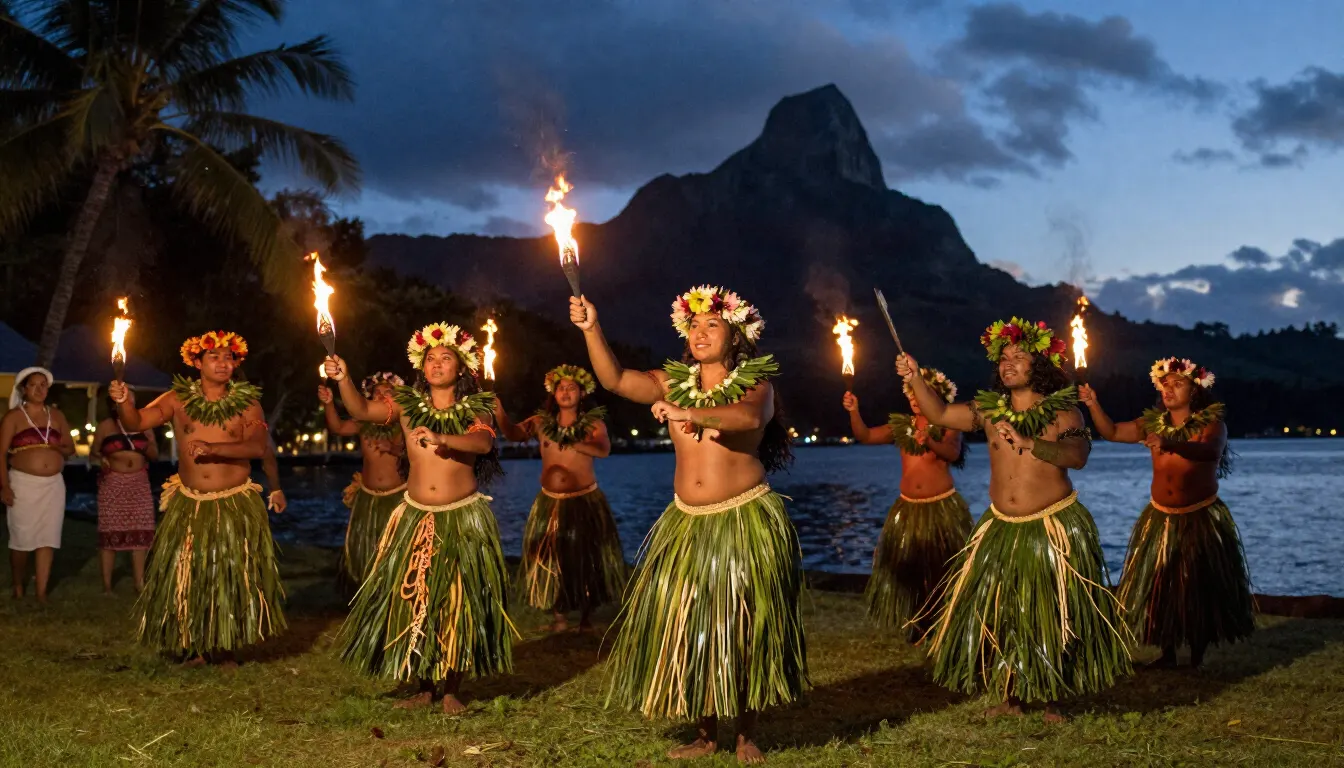
- Language and culture: French is the official language and Tahitian is spoken at home in many families. Dance groups train for the Heiva festival each July. A culture and marae tour is the easiest way for visitors to meet that side of the island.
Our tip: rent a bike or car for a day and do the full loop of the island. You will pass homes, schools, churches and family gardens that you never see from a resort, and it puts the census figure in perspective.
Residents vs visitors: how tourism shapes the island
French Polynesia welcomed a record 281,227 tourists in 2025, staying 16.5 days on average, and almost 39% of them came from the United States. ISPF doesn't publish a Bora Bora-only count, but Bora Bora is the territory's most famous resort island, and cruise ships also anchor off Vaitape and tender passengers ashore.
That imbalance explains a lot. On busy days, resort guests and cruise passengers share a small island with 10,758 residents who need housing, schools and water. If you want to support local people, eat at family-run snacks, buy crafts directly from makers in Vaitape, and book tours with local operators. Our Bora Bora cost guide shows where that saves you money too.
Can you live in Bora Bora?
As a visitor, you can stay a while; as a resident, it takes paperwork. The US State Department says US citizens can stay up to 90 days in any six months without a visa, with a return ticket. Beyond that you need a long-stay visa or residence permit from the French authorities, since immigration is a French state power (we explain the split in what country is Bora Bora in).
Working is harder still. French Polynesia's investment agency notes in its foreign investor FAQ that work permits are issued locally while visas come from France, and that buying or renting property does not by itself give you the right to stay long term. Most jobs are in tourism, French is expected, and housing is limited. Our honest take: try a long stay first, then talk to the French consulate before you plan a move.
Frequently asked questions
What is the population of Bora Bora?
10,758 residents at the August 2022 census, according to French Polynesia's statistics institute (ISPF). Including people counted elsewhere, the legal total is 10,856.
Why is the population of Bora Bora so small?
The island has only about 30 km² of land, much of it steep mountain, and half of all jobs are in hotels and restaurants. High living costs, family-held land and young people leaving to study also keep numbers down.
Do people actually live in Bora Bora?
Yes. Nearly 11,000 people live there year-round, mostly on the main island in the districts of Nunue (with Vaitape), Faanui and Anau. Many work in tourism, fishing, shops and local government.
How big is Bora Bora?
The main island and its motu cover about 30.5 km², under 12 square miles, inside a lagoon of about 78 km². The commune, which also includes the uninhabited Tupai atoll, covers 41.5 km².
Is Bora Bora's population growing?
Slowly. It rose from 8,927 in 2007 to 10,549 in 2017 and 10,758 in 2022. The 2.0% growth from 2017 to 2022 was double the rate for French Polynesia as a whole.
Can Americans live in Bora Bora?
US citizens can stay up to 90 days in six months without a visa. Living there longer requires a long-stay visa or residence permit from the French authorities, and working requires a permit too.
Sources
- ISPF: 2022 legal population by commune and associated commune
- ISPF: The 2022 population census in French Polynesia (Points Référence no. 1396, February 2024)
- ISPF: 2022 census press conference (census dates, migration balance)
- INSEE: legal populations of French Polynesia's communes in 2022
- INSEE: legal populations by commune and associated commune, 2017
- French Senate report annex: population of French Polynesia's subdivisions, 2007
- ISPF: price comparison between French Polynesia and mainland France, 2022
- ISPF: tourism figures, December 2025
- Wikipedia: Bora-Bora (commune), area and Tupai
- Les Nouvelles Calédoniennes: "Bora Bora perd encore un hôtel" (September 2010)
- French Polynesia Investment Agency: foreign investor FAQ
- Tahiti Tourisme: Hawaiki Nui Va'a 2026