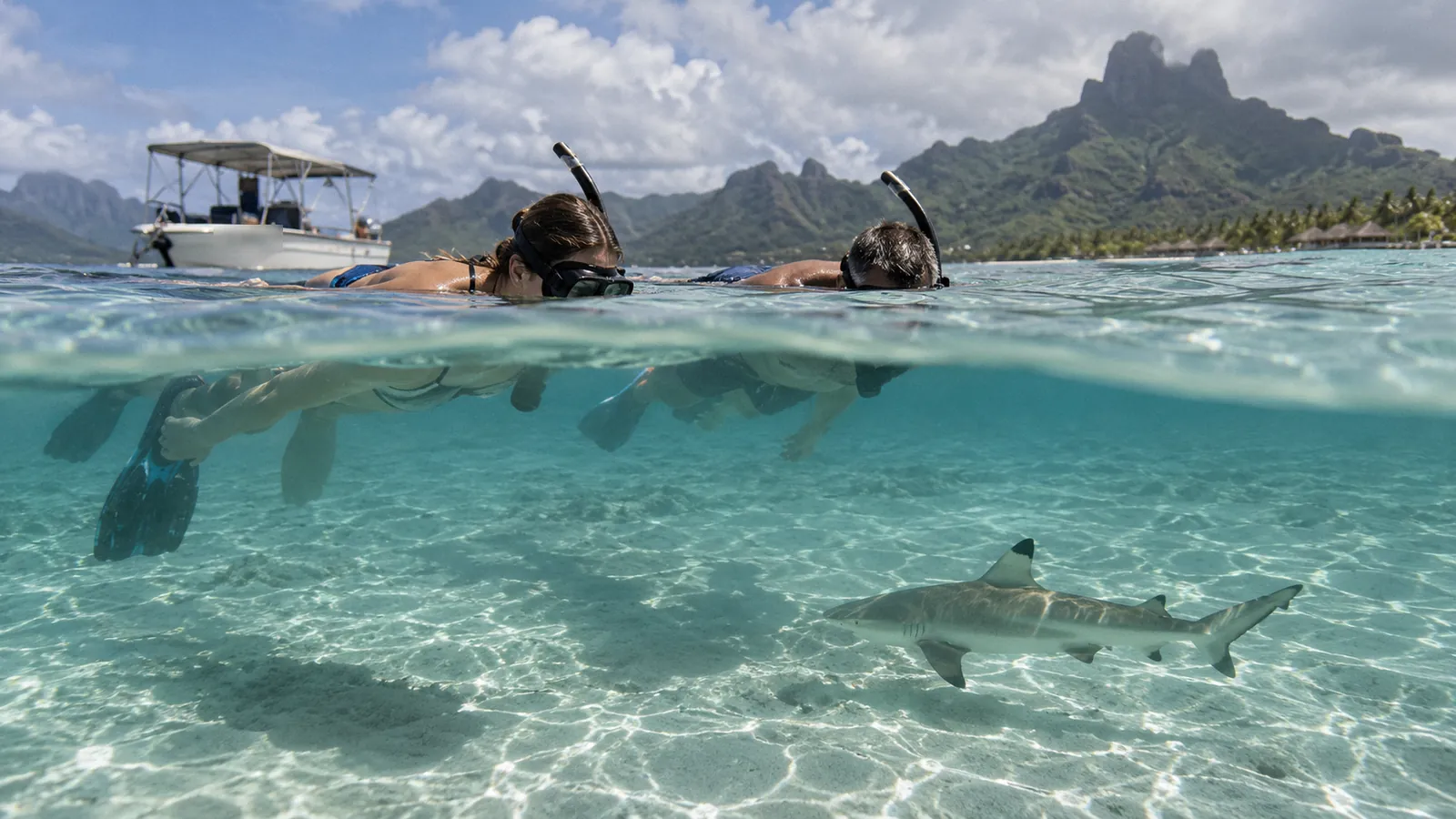
The short answer: Yes, Bora Bora is a low-risk destination. The US State Department rates French Polynesia at Level 1, "Exercise normal precautions," its lowest advisory level, and Canada and the UK give similar advice. Violent crime is rare. Sunburn, coral cuts, mosquito bites and scooter spills are far more likely to spoil your trip than sharks.
- Crime: low. Petty theft happens, so lock up valuables and avoid isolated beaches after dark.
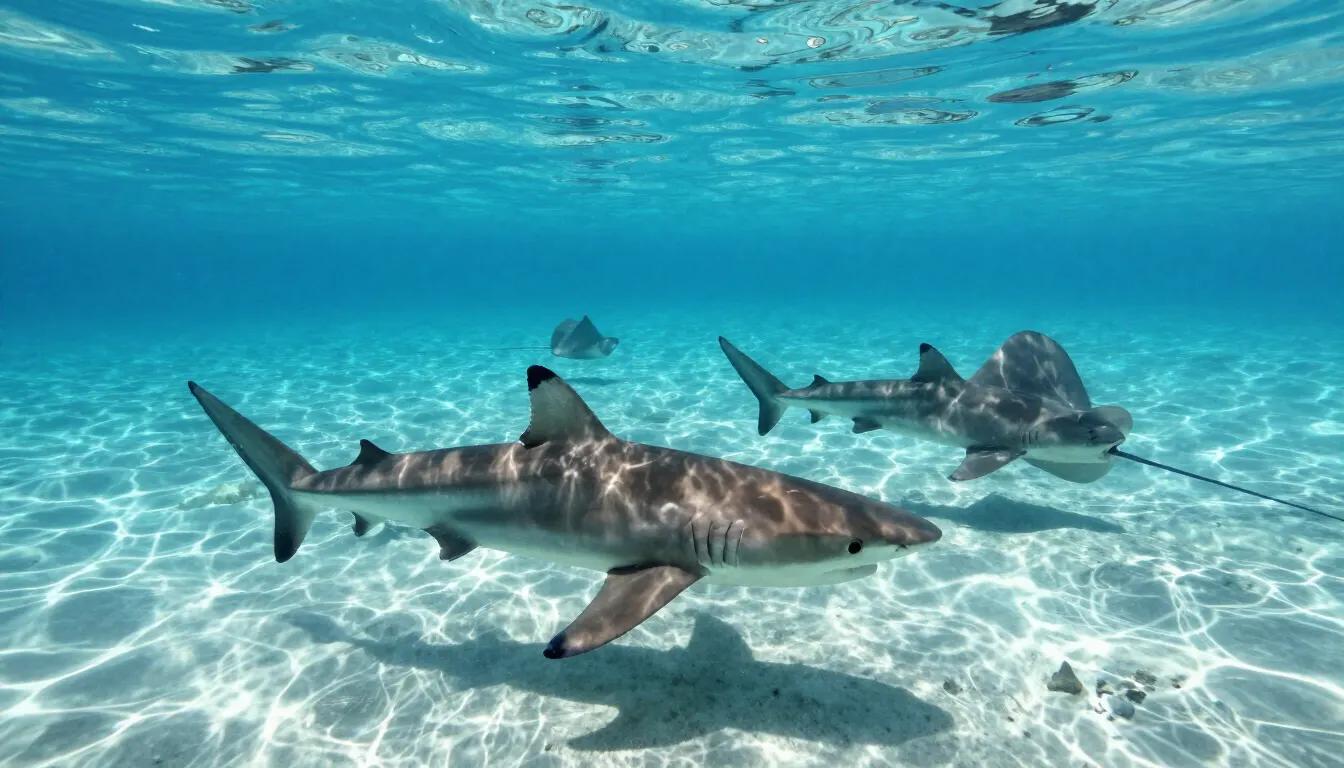
- Sharks: the blacktip reef sharks on snorkel tours are shy and rarely a threat. Bites are rare, and feeding sharks is illegal.
- Weather: cyclone season runs November to April, and a strong El Niño expected through early 2027 raises the risk this season.
Is Bora Bora safe? What the travel advisories say
Bora Bora is part of French Polynesia, an overseas collectivity of France, so government travel advice covers the whole territory. As of October 2026:
- United States: Level 1: Exercise normal precautions (issued December 2024, still current). The State Department calls the crime rate low and strongly recommends insurance that covers medical evacuation.
- Canada: "Take normal security precautions," its lowest level.
- United Kingdom: no specific warnings; the FCDO page was still marked current in September 2026.
None advises against travel anywhere in French Polynesia. Their practical warnings are covered below.
Crime and personal safety in Bora Bora
Bora Bora is a small island of about 10,700 people. The US and Canadian advisories both say pickpocketing and purse snatching occur, though violent crime is rare. The UK adds: avoid isolated areas, including beaches, after dark.
- Use the room safe for passports and spare cards, and carry little cash. Our money and currency guide covers cards, ATMs and the CFP franc.
- Don't leave bags on the sand while you swim at Matira Beach, or in a rental car or scooter basket.
- Streets can be dark at night. Book a taxi for evening trips and agree the fare first, since taxis aren't metered.
Solo travelers and women
No official advisory gives specific warnings for women or solo travelers here. The general advice applies: stick to busier places at night and tell your hotel your plans if you hike or kayak alone.
LGBTQ travelers
The State Department notes there are no legal restrictions on same-sex relationships, and France's 2013 marriage-equality law also covers French Polynesia (our Bora Bora wedding guide explains how weddings work for visitors). Canada adds that LGBTQ travelers could still face some discrimination.
Are there sharks in Bora Bora?
Yes, and seeing them is one of the reasons people come. French Polynesia made its entire sea area a shark sanctuary in 2006. The Bora Bora sharks you are likely to meet:
- Blacktip reef sharks. The sharks on lagoon snorkel tours: small, shy and quick to swim off. Guides anchor over shallow sand where blacktips and pink whiprays gather.
- Lemon sharks. Larger and heavier-bodied, they are mainly seen by scuba divers, notably at Tapu, a dive site outside the barrier reef.
- Gray reef sharks on deeper outer-reef dives, which suit experienced divers. See our scuba diving guide.
How often do sharks bite?
Rarely. Across all of French Polynesia's 118 islands, a 2023 review counted 125 shark bites between 1940 and 2022, three of them fatal. That's fewer than two a year for the entire territory.
The most recent widely reported Bora Bora case was in May 2022: a visitor on a boat outing near Motu Tapu was bitten on the hand. Regional press reported that the shark was a blacktip and that she was treated at the hospital on Raiatea. The injury was not life-threatening.
Swimming with sharks in Bora Bora: how to do it safely
The shark and ray snorkel is a calm, shallow-water outing. A few rules keep it safe:
- Book an operator that doesn't feed. Attracting fish, rays or sharks with food is illegal in French Polynesia. In August 2025 the government warned that feeding attracts predators and can cause serious injury or even death; fines reach 17.8 million XPF plus two years in prison when protected species are harmed.
- Look, don't touch. Don't chase animals, and never stand on a ray: whiprays carry a venomous tail spine.
- Stay with the group and follow the guide's briefing.
- Skip shiny jewelry and move calmly.
Compare tours on our shark and ray encounters page or book the Shark & Ray Snorkel Excursion. Open-ocean whale swims (July to November) are different: in 2019 a snorkeler watching whales off Moorea was seriously bitten, reportedly by an oceanic whitetip. Use a licensed operator.
Other lagoon and reef hazards
- Coral cuts heal slowly in the tropics and infect easily. Don't stand on coral (it's protected), and clean any cut promptly.
- Currents. Beaches have no lifeguards, and Canada warns that strong currents are common. Teavanui Pass, the lagoon's only opening to the ocean, is a boat channel where lagoon water drains out, and currents can run hard when the swell is up. Snorkel near the pass or outer reef only with a guide or dive center.
- Boats. Transfers, tours and jet skis use the lagoon all day. Stay close to shore or your boat, and wear a bright cap or tow a float if you swim out.
- Sun. The tropical midday sun is fierce all year. Wear a rash guard and reapply reef-friendly sunscreen after every swim.
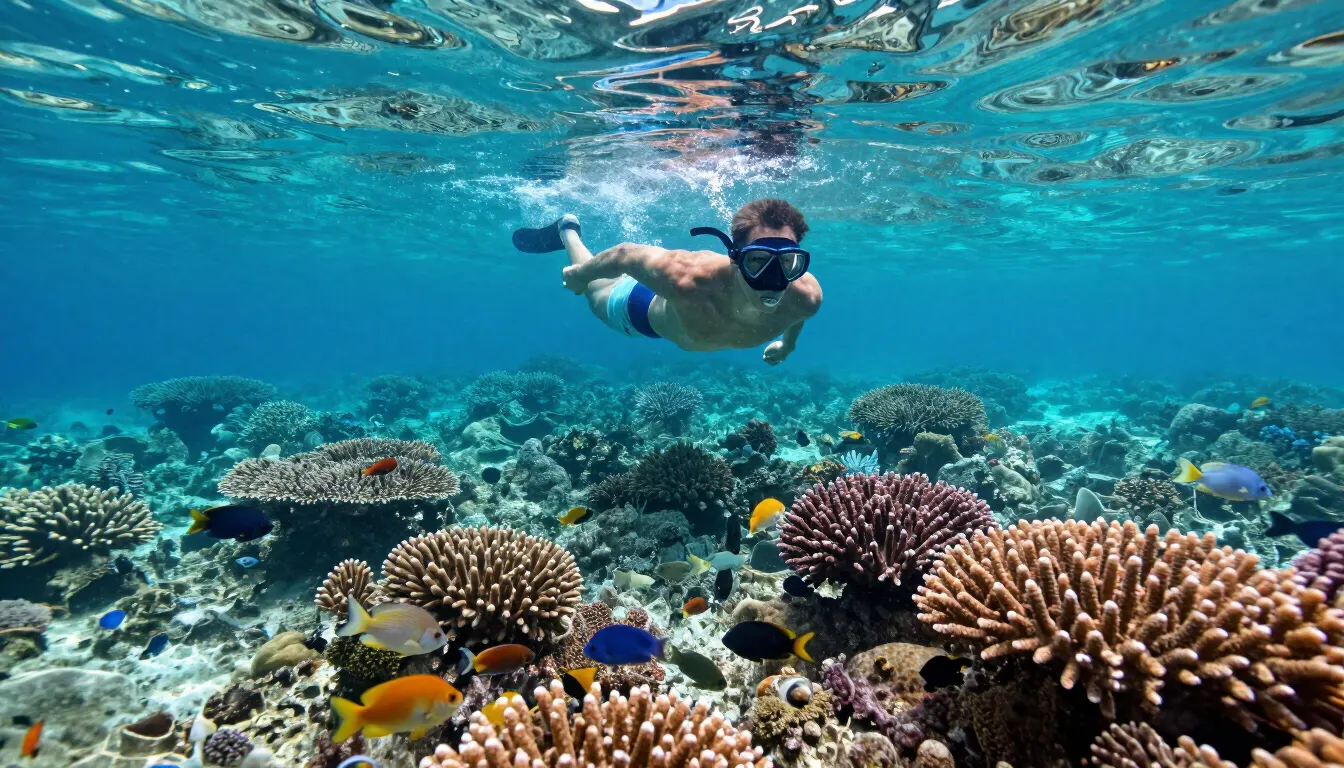
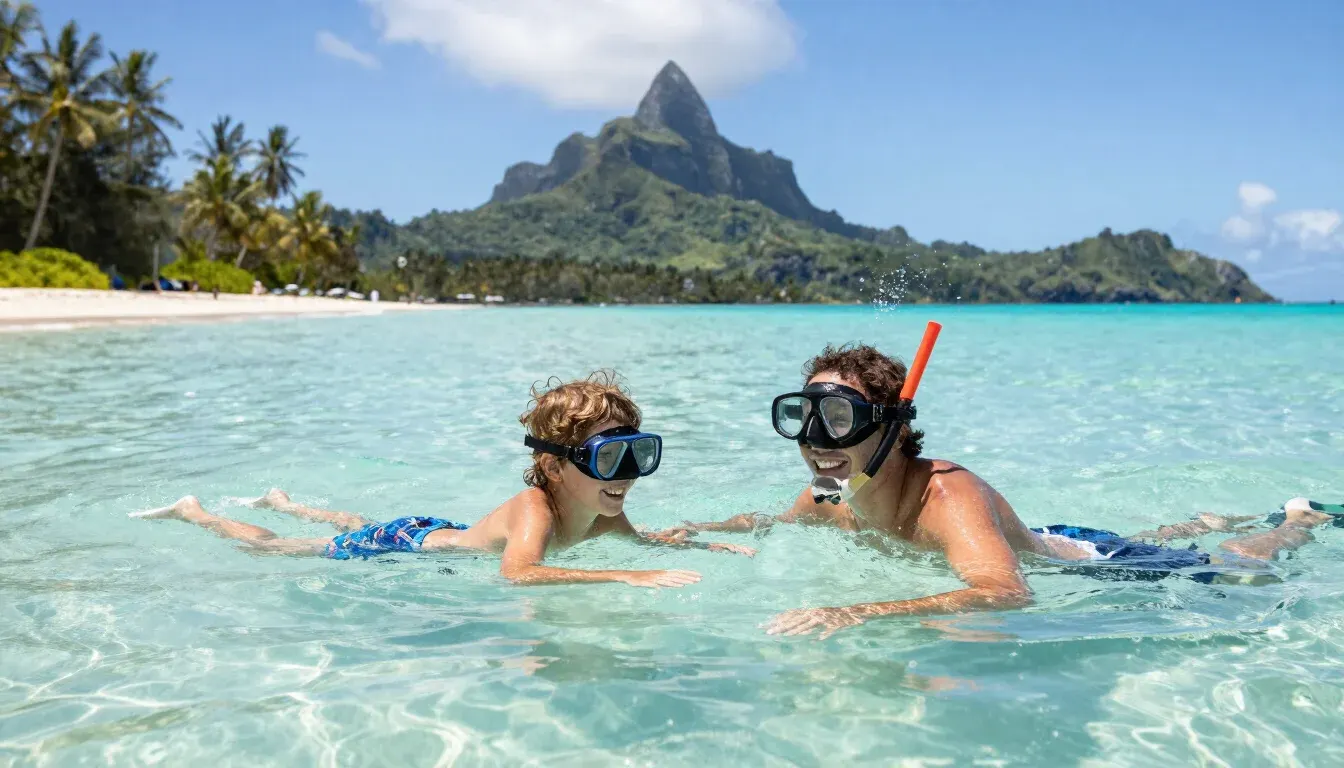
Our snorkeling and lagoon tours page lists guided trips.
Health: dengue, tap water and medical care
Dengue and other mosquito-borne illness
Dengue is the main health risk, with periodic epidemics; Canada and the UK also list chikungunya and Zika. French Polynesia's health bulletin for late August 2026 reported low dengue circulation between epidemics, but that can change. Most travelers can't get a dengue vaccine, so avoid bites: use repellent by day as well as at dusk (dengue mosquitoes bite in daylight) and choose rooms with screens or air conditioning.
Leptospirosis and ciguatera
Leptospirosis spreads through fresh water and mud contaminated by animal urine. In 2025 the Leeward Islands, which include Bora Bora, had French Polynesia's second-highest rate, with cases rising in the rainy season. Cover cuts, wear shoes on muddy hikes, and avoid streams after heavy rain. Ciguatera is a poisoning from toxins that build up in some reef fish and survive cooking and freezing, so don't eat reef fish you catch without local advice.
Can you drink the tap water?
On the main island, generally yes. French Polynesia's water-quality reports for 2023 and 2024 list Bora Bora among the few communes supplying drinking-quality water across their whole territory, with desalination plants topping up supply. Resorts on the motu may run their own system, so ask at check-in.
Hospitals and medical evacuation
Bora Bora has a public dispensary (health center) about 1 km from central Vaitape, but no hospital. Serious cases are transferred to the hospital in Uturoa on Raiatea or to Tahiti, home to the territory's main hospital (CHPF, at Taaone near Papeete) and its only hyperbaric chamber. Dial 15 for an ambulance, 17 for police and 18 for the fire service. Medicare doesn't cover you abroad, so buy travel insurance that includes medical evacuation (and diving, if you dive).
Cyclone season, tsunamis and the 2026 to 27 El Niño
Cyclones can form from November to April, the wet season, when December and January are the wettest months (see best time to visit Bora Bora). Direct hits don't happen every year, but they do happen: Cyclone Osea in November 1997, during a strong El Niño, destroyed about 30% of the island's infrastructure and more than 300 homes.
That matters this season. On 8 October 2026 NOAA said a strong-to-very-strong El Niño is likely through January to March 2027. Météo-France notes that in El Niño years cyclone activity is more widespread than usual, storms can be more intense, and the season can start earlier and end later. Traveling between November 2026 and April 2027? Book flexible rates, buy insurance that covers weather disruption, and follow official instructions.
A distant earthquake can also send a tsunami across the Pacific. In July 2025, after a magnitude 8.8 quake off Kamchatka, the authorities issued an alert and cleared coastlines, mostly in the Marquesas. If you hear an alert, move away from the shore as instructed.
Road safety: scooters, bikes and the coast road
A single 32 km road loops the main island. It is mostly flat and paved but narrow, and you share it with pedestrians, cyclists, dogs and the odd chicken. The State Department urges extra care on mopeds and bikes, notes that side streets often lack lighting, and reminds drivers that drunk driving is illegal. Wear a helmet, rent a scooter only if you're an experienced rider, and avoid riding after dark or after cocktails. Traveling with kids? See Bora Bora for families.
Quick risk table: Bora Bora safety at a glance
| Risk | How likely | How to avoid it |
|---|---|---|
| Sunburn and heat | Very likely if unprotected | Rash guard, hat, reef-friendly sunscreen, midday shade |
| Coral cuts | Common on snorkel days | Reef shoes, don't stand on coral, clean cuts at once |
| Mosquito bites, dengue | Bites likely; dengue low in late 2026 but recurs | Repellent day and evening, long sleeves, screened rooms |
| Petty theft | Occasional | Room safe; nothing left on the beach or in cars |
| Scooter or bike crash | A real risk on narrow roads | Helmet, slow speeds, no night riding or drinking |
| Strong currents | Near the pass and reef edges | Stay inside the lagoon; go with a guide |
| Stonefish sting | Uncommon but serious | Reef shoes; get medical help fast |
| Ciguatera | Uncommon | Don't eat reef fish you catch without local advice |
| Shark bite | Very rare | No feeding or touching; follow the guide |
| Cyclone | Possible Nov to Apr; higher in 2026 to 27 | Flexible bookings, insurance, follow alerts |
Frequently asked questions
Is Bora Bora safe for tourists?
Yes. The US rates French Polynesia at Level 1, "Exercise normal precautions," and violent crime is rare. The main risks are petty theft, sunburn, coral cuts, dengue, scooter accidents and cyclones from November to April.
Are there sharks in Bora Bora?
Yes. Snorkelers meet blacktip reef sharks in the lagoon, and divers see lemon sharks and gray reef sharks outside the reef. Sharks have been protected in French Polynesia since 2006, and serious bites are rare.
Is it safe to swim with sharks in Bora Bora?
On a guided snorkel tour, yes for most people. Blacktip reef sharks are shy and rarely a threat. Choose an operator that doesn't feed the animals (feeding is illegal), don't touch sharks or rays, and follow the guide's briefing.
Can you drink the tap water in Bora Bora?
On the main island, generally yes: water-quality reports for 2023 and 2024 rate Bora Bora's public supply as drinking-quality. Resorts on the motu may run their own system, so ask at check-in.
Is there a hospital on Bora Bora?
No. Bora Bora has a public dispensary near Vaitape. Serious cases are transferred to the hospital on Raiatea or to Tahiti, so buy travel insurance that covers medical evacuation. Dial 15 for an ambulance.
Is it safe to visit Bora Bora during cyclone season?
Many people travel from November to April without problems, but cyclones can hit, and a strong El Niño is expected through early 2027. Book flexible rates, get insurance that covers weather disruption, and follow local alerts.
Sources
- US Department of State: French Polynesia Travel Advisory and Country Information: travel.state.gov
- Government of Canada: Travel advice for French Polynesia: travel.gc.ca
- UK FCDO: French Polynesia travel advice (safety, health): gov.uk
- Direction de la santé, French Polynesia: health bulletins 30/2026 and 03/2026 (leptospirosis), ciguatera review, health centers, drinking-water reports 2023 to 2024: service-public.pf
- Service du Tourisme / DIREN: "Stop au sharkfeeding" notice (29 August 2025): service-public.pf
- Outremers360: shark risk in French overseas territories (April 2023); Mongabay: French Polynesia's shark sanctuary (May 2024)
- RNZ via Cook Islands News and Les Nouvelles Calédoniennes (May 2022): Bora Bora shark bite; L'Écho touristique (October 2019): Moorea incident
- Tahiti Infos: "Beware of stonefish" (October 2024); Tahiti Tourisme: Health
- NOAA Climate Prediction Center: ENSO Diagnostic Discussion (8 October 2026); Météo-France El Niño outlook (reported August 2026); Cyclone Osea (Wikipedia)
- Frommer's: Bora Bora port report; Lonely Planet: Getting around Bora Bora; SSI: Bora Bora diving guide