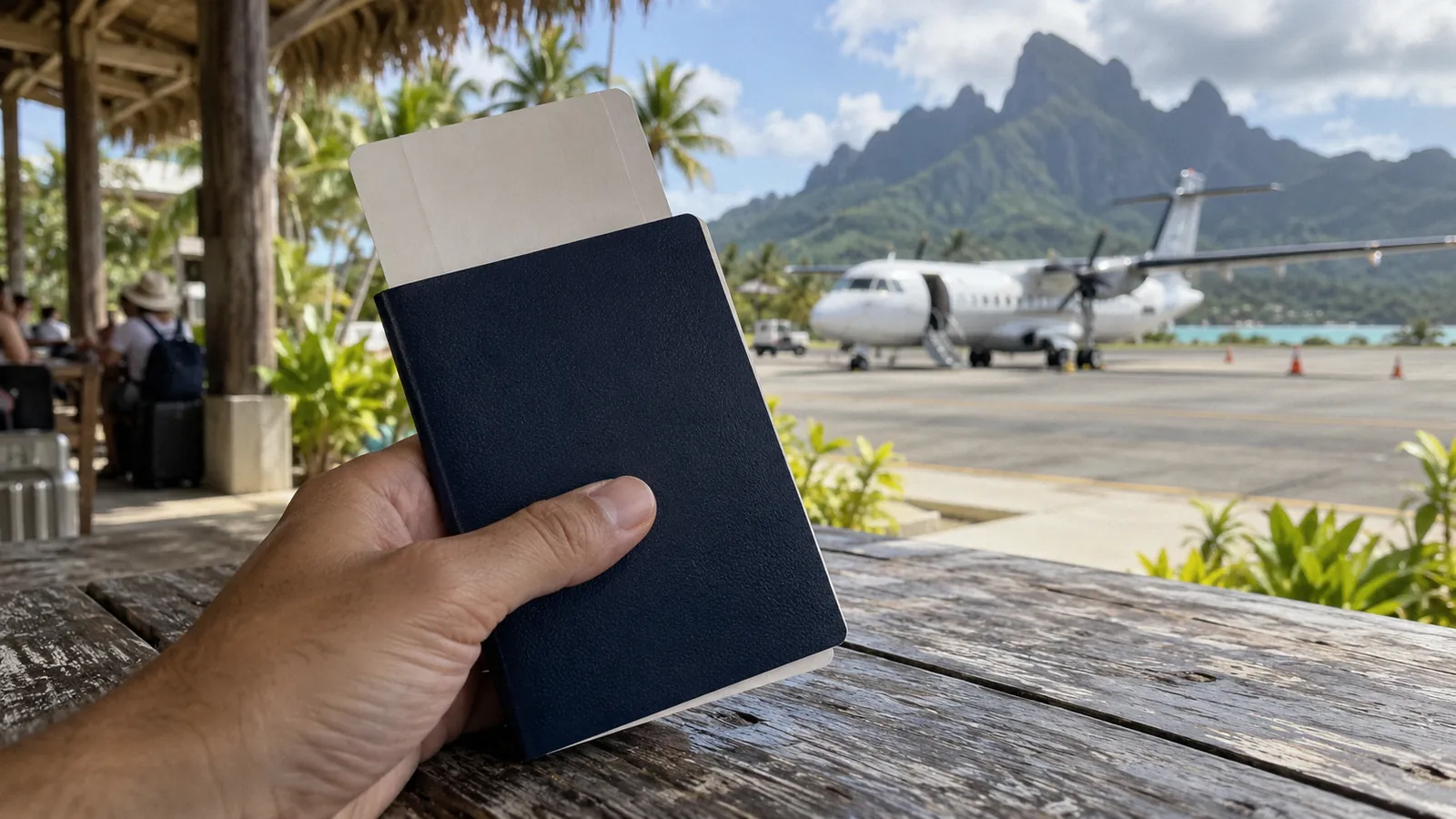
The short answer: Yes. Bora Bora belongs to France, not the United States, so every US traveler needs a valid passport book to fly there. You don't need a visa for a vacation of up to 90 days, but you do need a return or onward ticket, and the US State Department advises six months of passport validity.
- Passport: a regular passport book. The passport card and the 12-page emergency passport won't work.
- Visa: none for US citizens staying 90 days or less in any six-month period.
- ETIAS: not required. French Polynesia is outside the Schengen area, and as of October 2026 ETIAS still had no launch date anyway.
Do you need a passport to go to Bora Bora?
You do. Bora Bora is an island in French Polynesia, an overseas collectivity of France in the South Pacific. It is not a US territory like Guam or Puerto Rico, so arriving in Papeete is an international border crossing with French immigration officers. If the geography is fuzzy, our explainer on what country Bora Bora is in sorts it out.
Two US documents catch people out:
- The passport card. The State Department says it is "not valid for international travel by air." It covers land and sea crossings from Canada, Mexico, Bermuda and some Caribbean countries, and works as REAL ID for US domestic flights. It will not get you onto a flight to Tahiti.
- The emergency passport. The State Department's French Polynesia page warns that the 12-page emergency passport is not valid for visa-free entry.
Every route to Bora Bora goes through Faa'a International Airport near Papeete, and you clear immigration there before the short hop to the island. The full routing is on our how to get to Bora Bora guide. Coming by ship? Carry a passport book on any Bora Bora cruise too. Most French Polynesia cruises start with a flight to Papeete, and if you have to leave a cruise early, you fly home.
How long must your passport be valid?
This is where official sources disagree, so plan for the stricter rule.
- US State Department: its French Polynesia page lists six months of validity and at least one blank page for stamps.
- Government of Canada: says the passport must be valid for at least three months beyond the date you expect to leave French Polynesia, and warns that airlines may apply stricter rules.
We'd follow the State Department. If your passport expires within six months of your return date, renew it before you book. A check-in agent who reads the six-month rule can deny boarding, and arguing about French law at the counter in Los Angeles rarely ends well. Also make sure the name on your ticket matches your passport exactly. That matters for honeymooners who have changed a surname; our Bora Bora honeymoon guide covers the rest of the planning.
Bora Bora visa requirements for US citizens
For a normal vacation, there is no Bora Bora visa to apply for. The State Department's French Polynesia page says US citizens on a tourist passport don't need a visa for stays of no more than 90 days in every six-month period. What you do need on arrival:
- A return or onward ticket. The State Department says tourists "must be in possession of a return ticket." Keep the confirmation on your phone and a printout in your bag.
- Proof you can support yourself. Canada notes that officials may ask for proof of sufficient funds. A hotel confirmation and a credit card normally cover it.
Planning to work, study or stay longer than 90 days? Then you need a French visa issued before you travel, through France's consular network. Travelers with other passports should check their own nationality: Tahiti Tourisme notes that many countries are visa-exempt for stays under three months, but not all, and French and EU citizens can enter with a national ID card.
Does ETIAS apply to Bora Bora?
No. ETIAS is the European Union's planned online travel authorization for visa-free visitors to 30 European countries, with a fee of 20 euros. It covers France, which is why people ask. But it covers European France only.
- The EU agency that runs the system, eu-LISA, lists France on its ETIAS country map with the note that it excludes overseas territories.
- Canada's travel advice states plainly that French Polynesia is not part of the Schengen area.
- Timing: the EU had pencilled in the last quarter of 2026, but by 19 October 2026 the target had been removed from the European Commission's page and no start date had been announced.
So for a trip to Bora Bora, there is nothing to apply for or pay. Any website charging you for a "French Polynesia ETIAS" is not official. The only exception: if your trip includes a stop in mainland France or another Schengen country, Schengen rules apply to that part of the trip, including ETIAS once it starts.
Bora Bora vaccine requirements
There are none for travelers arriving from the United States. The State Department lists required vaccinations as "None." The one exception is yellow fever: if you arrive from, or transit through an airport in, a country with yellow fever risk, you need proof of vaccination. A typical US itinerary through Los Angeles, San Francisco or Honolulu doesn't trigger that rule.
No vaccine is required, but routine shots should be up to date, and dengue is the main health risk on the islands. Most travelers can't get a dengue vaccine, so repellent is your protection. Our Bora Bora safety guide covers dengue, tap water and medical care.
Customs and biosecurity: what you can bring into French Polynesia
French Polynesia sets its own customs and biosecurity rules, and they are stricter than many visitors expect.
Duty-free allowances
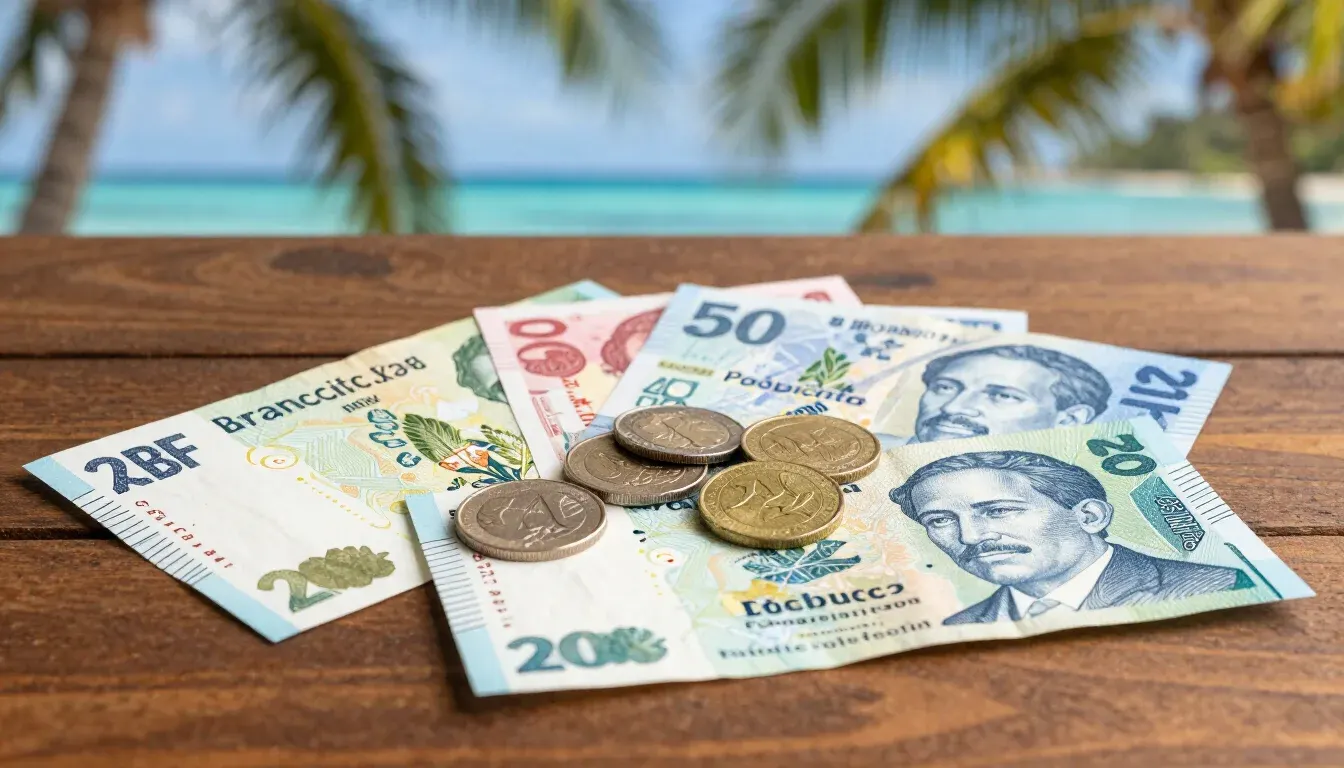
According to French Polynesia's customs service, adults 18 and over can bring in goods worth up to 50,000 XPF (about $470 at October 2026 rates) duty free, plus a separate allowance of tobacco (up to 200 cigarettes) and alcohol. Travelers aged 15 to 17 get the same 50,000 XPF, without alcohol or tobacco, and children under 15 get 15,000 XPF. You must declare cash or equivalents of 1,200,000 XPF (10,000 euros) or more. For how the CFP franc works once you're there, see our money and currency guide.
Food, plants and honey
The islands work hard to keep out pests and plant diseases. Under the biosecurity service's rules for arriving travelers:
- Honey from every country is banned without a health certificate or proof of treatment.
- Plants and plant products are in principle prohibited, and many fresh fruits and vegetables need a permit or certificate. Frozen, dried, canned or cooked versions generally don't.
- Animal products such as some meats and seafood can be refused, and unlabeled products are turned away.
- Anything of plant or animal origin must be declared at the biosecurity counter. Non-compliant goods are destroyed or sent back at your expense, and offenses carry fines and even prison.
The easy rule: eat the apple on the plane, and leave seeds, cuttings and souvenir honey at home.
Passports for minors: traveling to Bora Bora with kids
Every child needs their own passport book, babies included. For children under 16, US passports are valid for only five years, must be applied for in person each time, and generally need both parents' approval (Form DS-3053 handles a parent who can't attend). Check the expiry date early, because a child's passport runs out faster than an adult's.
The State Department says the US does not require proof of both parents' permission for a child to travel abroad, but some countries do, and it recommends carrying each child's birth certificate. If one parent is traveling alone with a child, or grandparents are taking the kids, bring a signed, notarized consent letter from the absent parent. Nobody may ask for it, but it is cheap insurance at a border. More family tips are on our Bora Bora with kids page.
Bora Bora travel documents checklist and timing
The State Department quotes 4 to 6 weeks for routine passport processing and 2 to 3 weeks expedited (an extra $60), not counting mailing time. If you're booking a peak-season trip for June to September, sort out passports first. Rooms and the Papeete to Bora Bora flights sell out months ahead anyway; see our best time to visit Bora Bora guide.
| Document | Needed? | Notes |
|---|---|---|
| US passport book | Yes | Six months' validity advised; one blank page |
| US passport card | No | Not valid for international air travel |
| Tourist visa | No | Up to 90 days in any six-month period |
| Return or onward ticket | Yes | Required for tourists |
| ETIAS | No | French Polynesia is outside Schengen |
| Vaccination certificate | Usually no | Yellow fever proof only if arriving via a risk country |
| Consent letter for a child | Recommended | When one parent or a non-parent travels with a minor |
Frequently asked questions
Do you need a passport to go to Bora Bora from the US?
Yes. Bora Bora is part of French Polynesia, a French overseas collectivity, so US citizens need a valid passport book. The US passport card is not valid for international air travel, and the 12-page emergency passport is not accepted for visa-free entry.
Do US citizens need a visa for Bora Bora?
No. US citizens can visit French Polynesia as tourists without a visa for up to 90 days in any six-month period. You must have a return or onward ticket, and officials may ask for proof of funds. Work, study or longer stays need a French visa.
How many months must my passport be valid for Bora Bora?
The US State Department lists six months of validity for French Polynesia, while Canada's advice says three months beyond your departure date. Airlines may apply the stricter figure, so make sure your passport is valid for six months after your trip.
Do I need ETIAS to visit Bora Bora?
No. ETIAS covers European Schengen countries, and the EU excludes France's overseas territories, including French Polynesia. As of October 2026, ETIAS had not started and had no launch date. Ignore any site charging for a French Polynesia ETIAS.
Are any vaccines required to visit Bora Bora?
Not for travelers coming from the US. The only entry rule is proof of yellow fever vaccination for people arriving from, or transiting through, a country with yellow fever risk. Keep routine vaccines current and use repellent against dengue.
Can I bring food into Bora Bora?
Packaged, labeled snacks are generally fine, but declare anything of plant or animal origin. Honey is banned without a certificate, and most fresh fruit, vegetables, plants and seeds need permits. Undeclared items can be destroyed and fined.
Sources
- US Department of State: French Polynesia international travel information (passport validity, visa, return ticket, currency declaration)
- US Department of State: Compare a passport card and book
- US Department of State: Passport processing times
- US Department of State: Apply for a child's passport under 16
- US Department of State: Travel with minors
- Government of Canada: French Polynesia travel advice (validity, Schengen status, yellow fever)
- eu-LISA: ETIAS countries and territorial scope
- EU Delegation to the US: Travelling to Europe (ETIAS)
- SchengenVisaInfo: ETIAS has no launch date (19 October 2026)
- Direction régionale des douanes de Polynésie française: Les franchises
- Direction de la biosécurité: J'arrive en Polynésie française
- Tahiti Tourisme: Visa and entry formalities